By: Matthew Winograd
One of the prominent news stories in recent weeks has been the very public battles between Harvard University, one of the United States’ oldest and most prestigious institutions of higher learning, and the Trump Administration. Harvard specifically has been one of the main targets of the Trump Administration’s efforts to combat anti-Semitism in universities across the United States. The targeting of Harvard specifically has been the source of much attention and contention across social media and the news. Harvard has stood out, not only for being one of the most famous universities in the world, but for standing up to the Trump Administration using lawsuits and stirring public anger towards the Trump Administration. While many know about this conflict, the details are less known. This article will give you a brief breakdown and timeline on what’s happening, why it’s happening, and what could happen in the future.
Before the major events occurred, it’s important to understand the context for the events that will be discussed in this article. In the early days and weeks of Donald Trump’s second term, he signed an executive order calling for stronger enforcement of government policies targeting anti-Semitism on college campuses. Subsequently, the Department of Justice (DOJ) announced the creation of a multiagency task force designed to combat anti-Semitism. The leader of this agency, Leo Terrell, reposted a post on X (formerly Twitter) calling him “HARVARD’S WORST NIGHTMARE.” These initiatives laid the groundwork for future actions taken against Harvard and other universities.

Specifically pertaining to Harvard, the first major action taken by the federal Government was an announcement on March 31 that the aforementioned Joint Task Force to Combat Anti-Semitism was to conduct a review of nearly $9 billion in future grants and contracts. The basis of this review was the university’s supposed “failure to protect students on campus from Anti-Semitic discrimination.”
A short time after this, the conflict escalated when on April 11, the Trump Administration sent Harvard a letter demanding the university reforms its admissions policies, hiring policies, and end its DEI practices. In a powerful move, just three days later, on April 14, Harvard announced that it would not comply with these demands, stating that it would not “surrender its independence or relinquish its constitutional rights.” Immediately following this, the Trump Administration announced it would be revoking $2.2 billion in research grants. This is when the story gained media attention and was brought to the public eye. The next few days consisted of a flurry of threats from the Trump Administration including Trump floating the idea of removing Harvard’s tax-exempt status, the Department of Homeland Security (DHS) threatening removing Harvard’s ability to admit international students, and the administration demanding more information and clarity regarding Harvard’s financial records.
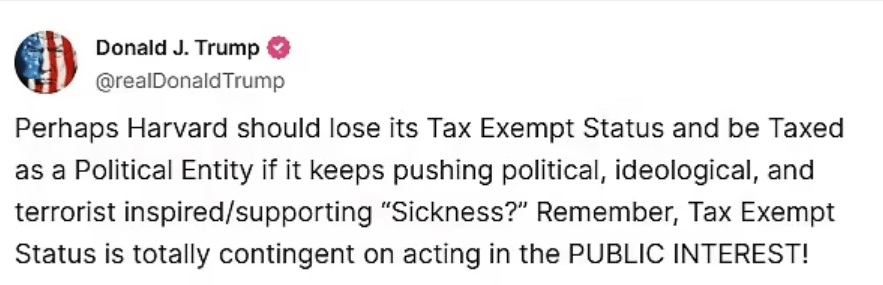
Harvard’s response to all of Trump’s actions and threats began on April 21, when it announced it would be suing the Trump Administration, citing violations of the First Amendment. Harvard argued that the cuts put critical research at risk and threatened Harvard’s status as an independent institution. The next day, Harvard joined other colleges of the American Association of Colleges and Universities in an open letter to the government condemning the Trump Administration and their “unprecedented government overreach and political interference.”
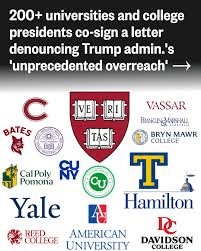
On May 2, Trump announced he would rescind Harvard’s status as a tax-exempt institution, following up on his previous threats. A Harvard spokesperson responded with a statement saying that there was “no legal basis to rescind Harvard’s tax-exempt status.” Whether or not this will happen is yet to be seen, as, true to the Harvard spokesperson’s statement, there is no legal basis for or method of carrying out this change, as federal law explicitly prohibits the president directing the IRS to review or change an institution’s tax status.
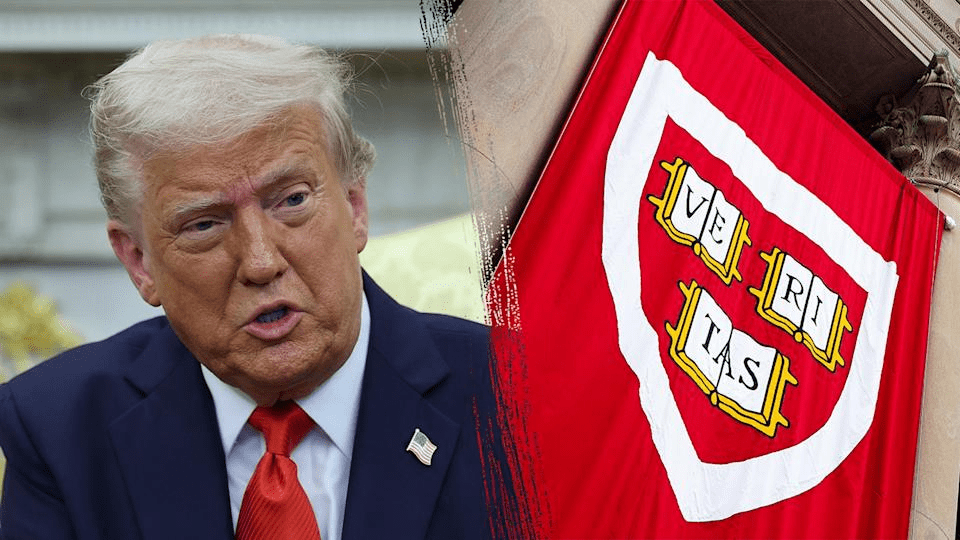
On May 5, it was announced that Harvard would no longer be eligible for new research grants. In the reasoning for this decision, Secretary of Education Linda McMahon cited Harvard’s “noncompliance with federal law.” Dealing yet another devastating blow to Harvard, on May 13, the federal government revoked another $450 million in federal funding due to more findings from the anti-Semitism task force. Finally, on May 22, the DHS followed through on its threat, announcing Harvard can no longer host international students. International students represent roughly a quarter of all Harvard students, so this decision has massive implications and makes the future unclear. What is clear is that Harvard will fight this action aggressively so they don’t have to face the uncertain future.

On May 23, Harvard sued to stop the Trump Administration from being able to carry out this action. A temporary restraining order was issued against the government, slowing the effects of this action. A court date has been set for May 29, in which a final battle will occur, with the world’s most famous university taking on the world’s most famous leader. The impacts and precedents that will be set by this case could alter the educational landscape of the United States, and redefine the role of the government in private education.
https://time.com/7283245/harvard-trump-funding-timeline/
https://www.cnn.com/2025/04/26/us/harvard-university-trump-timeline

 politicsblog.org
Leave a reply to sarahfish Cancel reply